Framework Overview
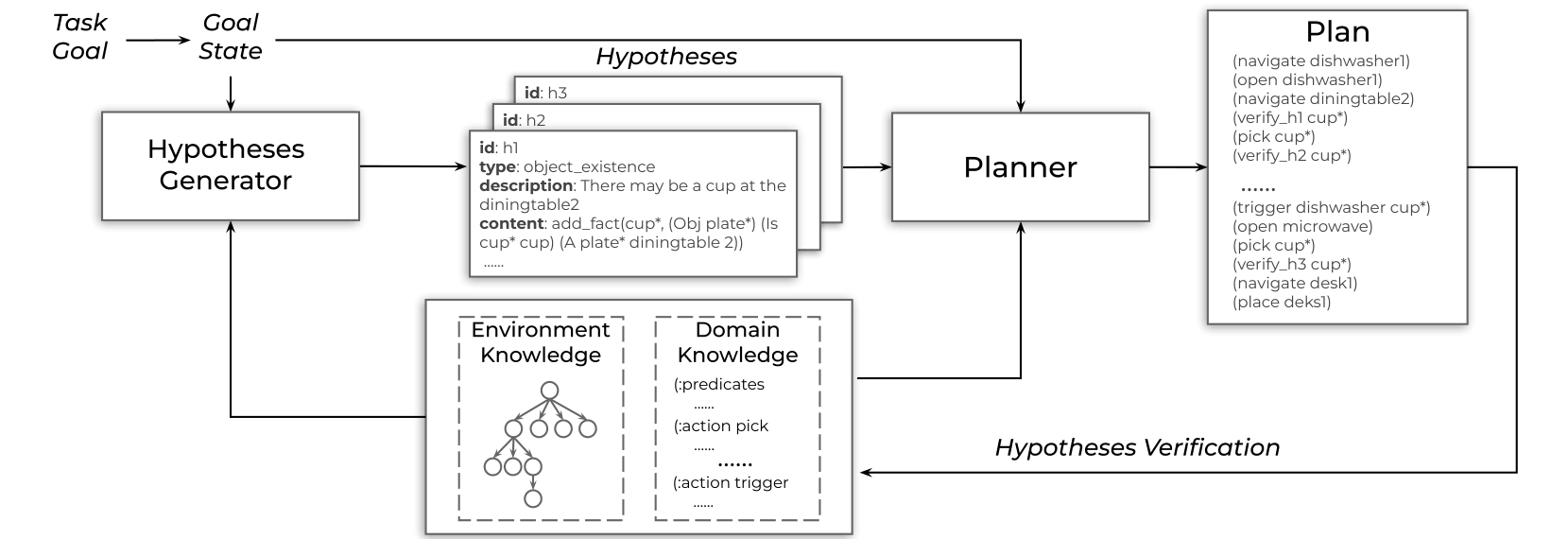
HUME tackles open-world robot planning by treating missing knowledge as uncertain, testable hypotheses rather than fixed facts. Given a task instruction and an incomplete world model, the system uses foundation models to propose task-relevant hypotheses about object locations, attributes, and action effects, then plans actions that both make progress toward the goal and verify those assumptions through interaction. This loop of hypothesis generation, planning, execution, and update allows the robot to continually expand its world model while remaining grounded in real observations.